
Choose your calling system
A simple, dependable way for a patient, resident, operator or staff member to call for help — in three models across two families. Wireless installs in minutes with no cabling; wired needs no batteries and no radio.
Also known as a call bell or calling bell system, patient call bell, peon calling system, attendant or caretaker calling system, staff calling system or service calling system — used across hospitals, elder care and senior living, homes, factories, offices and hospitality.
Three models to choose from
All three do the same essential job — a call point, an alert at the station, and an indication that stays until someone resets it. They differ in whether you run cable, and in how much the panel tells your staff.
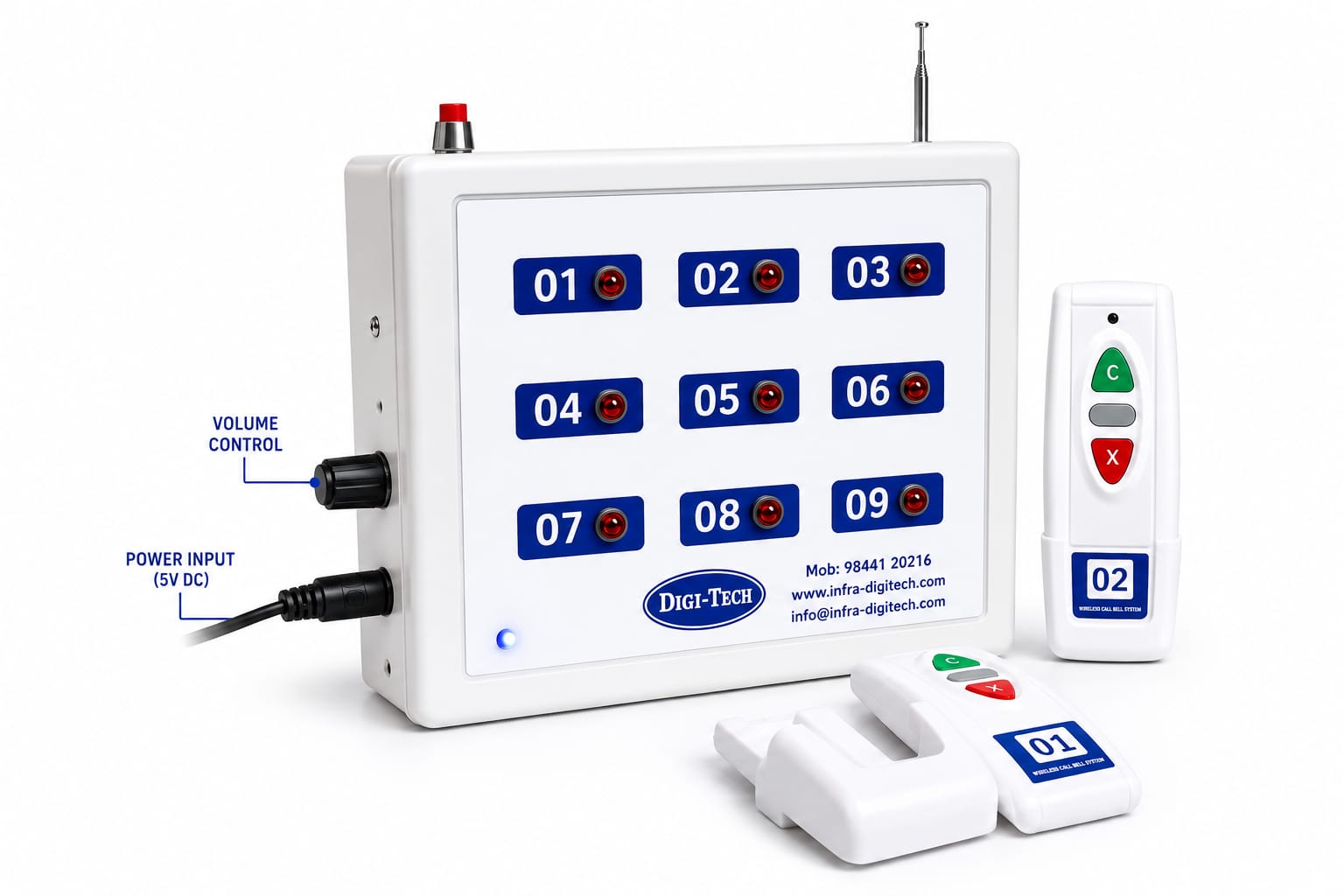
Wireless LED
A numbered LED lights up for the unit that called. The simplest and most economical model — no cabling, working within minutes.
- Nine calling units on one panel
- Three-button remote with emergency call
- Call restored after a power cut
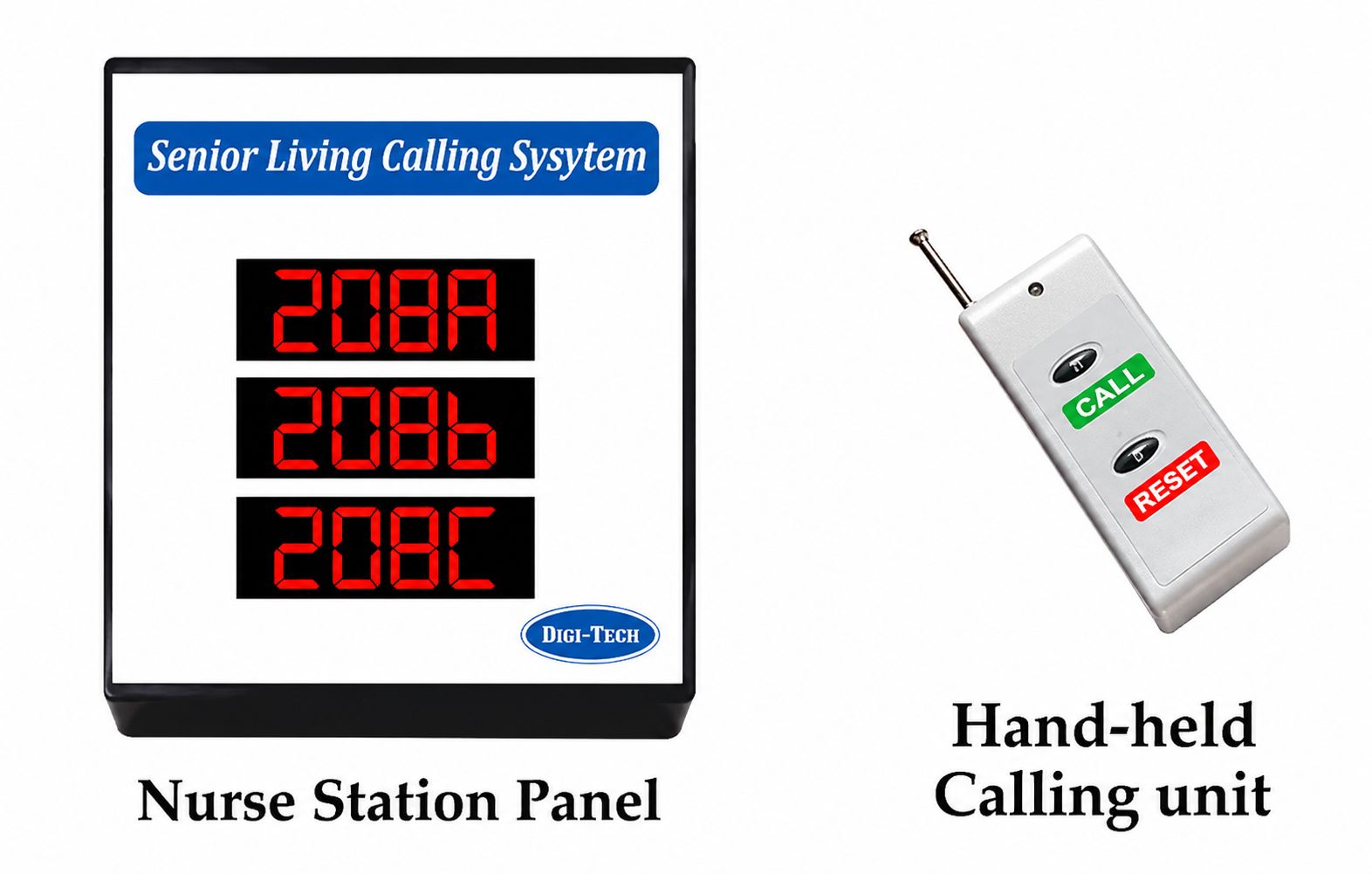
Wireless Display
The same wireless system, but the panel shows the actual room, bed or shop-floor number that called — so nobody has to translate a zone into a location.
- Shows the real identifier, e.g. 208A
- Three calls visible in arrival order
- Also the Attendant / Senior Living system
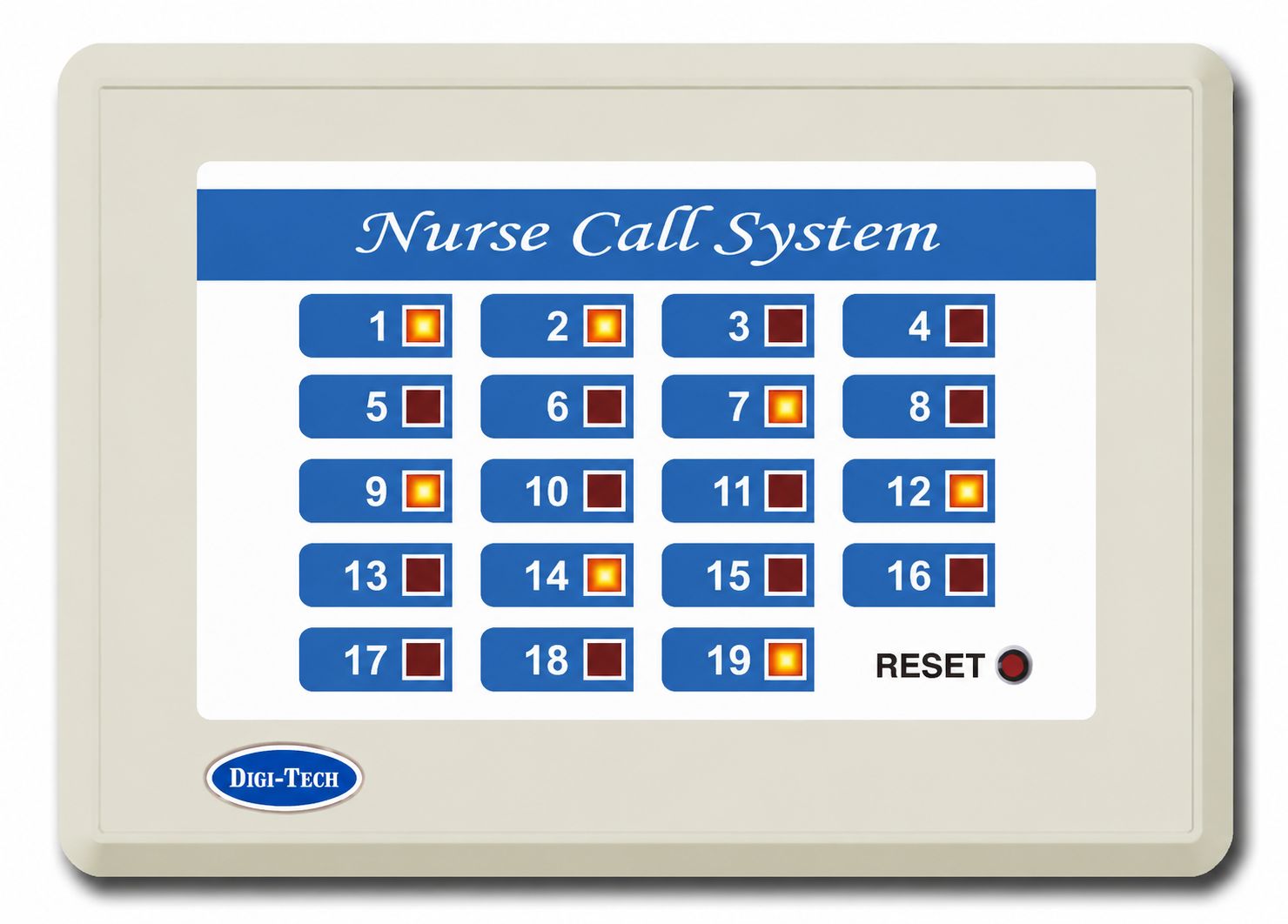
Wired
A push-bell switch at each point, cabled back to a numbered LED panel. No batteries anywhere and no radio to think about.
- Up to 19 numbered call points
- Switches and cabling by your contractor
- Nothing to pair, nothing to maintain
The two wireless models share the same radio, the same 70–100 m range and the same calling units — only the panel differs. You can see them side by side on the wireless page.
The wireless models need no installation at all
This is a true plug-and-play system, not a shortened installation. There is no wiring, no conduits, no civil work, no configuration and no IT involvement — and no installation charges to budget for. Power the receiver panel from an ordinary 5 V adapter, place or hand out the calling units, and it is working in minutes. Units arrive paired and numbered, so nothing has to be set up on site. Only the wired model needs cabling.
- No wiring or conduits
- No configuration
- No civil work or downtime
- No installation charges
All three models, feature by feature
The quickest way to decide: find the row that matters most to you and read across. Model names link through to full detail.
| Feature | WirelessWireless LED | WirelessWireless Display | WiredWired |
|---|---|---|---|
| Connectivity | RF wireless | RF wireless | Wired cabling |
| Wireless range | 70–100 m | 70–100 m | |
| Cabling required | |||
| What the station sees | Zone LED (01–09) | Room / bed / zone number | Numbered LED position |
| Identifies the exact room | |||
| Simultaneous calls shown | One per zone LED | Three, in arrival order | One per position LED |
| Capacity | 9 calling units | Ask us for your layout | Up to 19 points |
| Alphanumeric IDs (e.g. 208A) | |||
| Dedicated emergency button | |||
| Call restored after power cut | |||
| Batteries in calling units | |||
| Install effort | Minutes | Minutes | With the cabling |
| Expand later | Add units | Add units | Needs cabling |
Included Not applicable Ask us — depends on configuration
Need pull-cords, Code Blue, dashboards or NABH-grade reporting? That is a full nurse calling system — we make those too, as the Signavanc range.
Small system, big difference
True plug-and-play
The wireless models are not a quick installation — they are no installation. No wiring, no configuration, no civil work and no installation charges. Power the panel, hand out the calling units and it is live; a clinic or shop floor can be running the same afternoon.
Calls never disappear
Every call latches until a person resets it, so nothing is silently cleared. On the wireless LED panel, non-volatile memory even restores the active call after a power interruption.
None of the headache you do not need
If you do not need pull-cords, Code Blue, NABH-grade audit reporting or dashboards, a calling system delivers the part that actually matters — a person reaching help — without the cost and complexity of a full nurse call installation.
Far beyond the bedside
The same hardware calls a CNC operator to a machine, brings maintenance to a breakdown, calls a peon in an office or a waiter to a table. Only the labelling of the calling units changes.
One system, many industries
The hardware does not change from a hospital ward to a shop floor — only what the calling units are labelled and where the panel is mounted.
Healthcare
- Small hospitals and clinics that do not need Code Blue or NABH compliance
- Nursing homes, maternity homes and polyclinics
- Day-care surgery, dental and diagnostic centres
- Wards being retrofitted without closing them for cabling
- Home care for bedridden or recovering patients
Elder care & senior living
- Old-age homes and assisted-living residences
- Retirement communities and senior-living apartments
- Resident rooms calling a caretaker from anywhere in the building
- Memory care and high-dependency wings needing a simple, familiar button
- Palliative and long-stay care rooms
Industry & manufacturing
- Calling a CNC operator back to a machine that needs attention
- Breakdown calls to maintenance — the panel shows which shop floor or machine is calling
- Material-handler and forklift calls from a workstation
- Quality or supervisor calls from an assembly line
- Warehouse pickers calling a supervisor without leaving the aisle
- Clean rooms and pharma areas where staff cannot leave the station
Offices, institutions & government
- Peon / attendant calling from cabins and meeting rooms
- Government offices and public-service counters
- Pantry and housekeeping calls
- Bank counters calling back-office or the cash department
- Laboratories calling technicians between rooms
- Schools and colleges — staff room and administration calling
Hospitality, retail & service
- Restaurant table service and kitchen-to-waiter calling
- Hotel housekeeping, room service and spa calls
- Showroom and retail counters — customer assistance
- Service centres and workshops — bay to service advisor
- Salons and clinics — reception to treatment room
Home & residential
- A bedridden or recovering family member calling for help
- Elderly parents living independently within the same home
- Multi-storey homes and villas — calling between floors
- Home nursing and live-in attendant calling
- Guest rooms, annexes and outhouses
- Apartments and gated communities — resident to security or help desk
Before you decide
Wireless Call Bell System Buyer's Guide (India 2026): Uses, Price Factors & When You Don't Need a Full Nurse Call System
A practical guide to wireless call bell systems — also called peon calling systems or attendant calling systems — for hospitals, clinics, old-age homes, offices, factories, hotels and service centers. What they do, what decides the price, and how to know whether a simple call bell or a full nurse calling system is right for your site.
Read the guide
Wired vs Wireless Nurse Call: A Decision Framework for Indian Hospitals
When to default to wired, when to default to wireless, when hybrid makes sense, and the construction-phase trade-offs that drive total cost of ownership.
Read the guide
Nurse Calling System Price in India (2026): An Honest Guide from a Manufacturer
Most vendors hide nurse call pricing behind 'request a quote'. As the manufacturer, we would rather you walk into the conversation informed: real per-unit prices, what a 10-bed clinic vs a 100-bed hospital actually spends, what moves the price up or down, and the lifetime costs nobody mentions.
Read the guideCommon questions
Still unsure which model fits, or whether you need a full nurse call system instead? Our engineering team will tell you straight.
Is a call bell system the same as a peon calling system or attendant calling system?
Yes — they are the same hardware described by the industry each buyer comes from. In a hospital it is called a call bell or nurse call bell system; in an office it is a peon calling system or staff calling system; in senior care it is an attendant calling system; in a factory it is a supervisor or maintenance calling system; in a restaurant it is a table or waiter calling system. A calling unit sends the call, a panel shows who called and an alert sounds until it is reset. Only the labelling of the calling units changes.
Should I choose wireless or wired?
Choose wireless if the building is occupied, rented, or cannot be disrupted for cabling, if call points may move or multiply, or if you simply want the system working today — it installs in minutes with a 70–100 m range. Choose wired if the building is under construction or being rewired, if you want no batteries anywhere in the system, or if the environment is electrically noisy and you would rather not depend on radio. We make both, so we will tell you which genuinely suits your site.
Which model shows the actual room number?
The Wireless Display model. Its three-line 7-segment panel shows the real identifier that called — a room like 208A on a ward, or a machine or shop-floor zone in a factory — and holds three calls at once in arrival order. The Wireless LED model lights a numbered zone LED instead, and the Wired model lights a numbered position on the panel.
What is the difference between a calling system and a nurse calling system?
A calling system covers the essential act of reaching staff — a call point, an alert at the station, and an indication that latches until it is reset. A full nurse calling system adds ward-grade infrastructure: toilet pull-cords, corridor door indicators, Code Blue mode, LCD consoles, mobile nurse access, dashboards and audit reporting. For small hospitals, clinics and nursing homes that do not want the cost or the compliance overhead, the calling system does the job; NABH-accredited or multi-speciality facilities should choose the Nurse Calling System.
Can it be used outside healthcare?
Yes, and it commonly is. The same system is used for peon or attendant calling in offices, supervisor and maintenance calling on factory floors — where the display model shows exactly which machine or shop floor is calling — table service in hotels and restaurants, and customer-to-staff calling at service centres and retail counters.
Not sure which model fits?
Tell us how many call points you have, whether cabling is practical, and whether staff need to see a number — we will recommend the right model, or the right nurse call tier if you need more.