
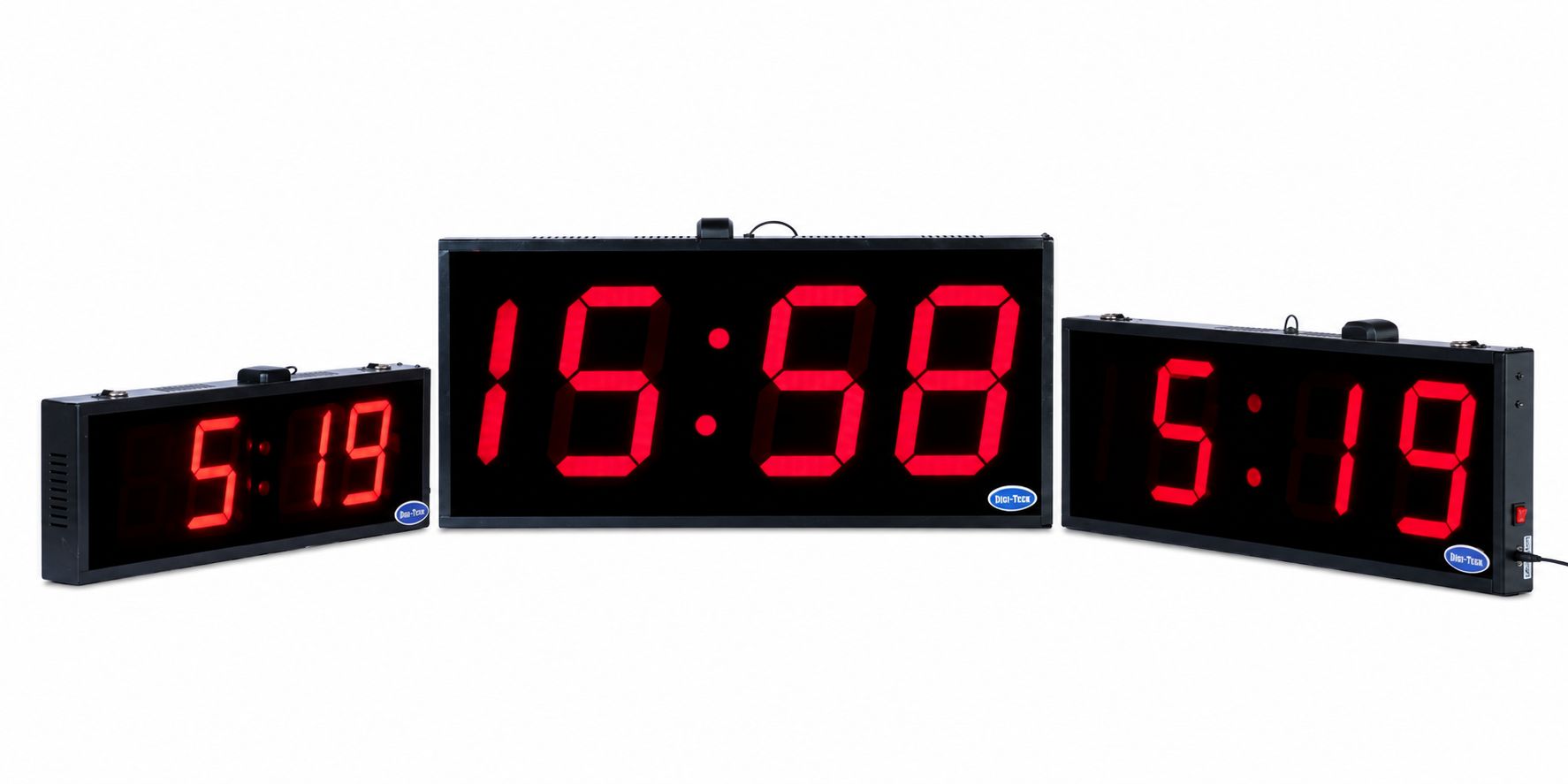
If you are budgeting for GPS synchronized clocks - for a hospital labour room, a pharma cleanroom, a factory floor or a railway platform - the first thing to know is that there is no single price. The same engineered clock core is packaged in digit heights from 2.3 inch to 12 inch, single to three-sided mounts, mild-steel to SS 304 cleanroom enclosures and IP20 to IP66 ratings - and each of those choices moves the price. As the manufacturer, here is the honest breakdown.
Indicative starting prices (2026)
These are approximate ex-works starting figures for standard configurations, to help you frame a budget. Your exact price depends on the configuration - digit height, display size, sides, enclosure and sync architecture - and is confirmed in a formal quotation.
- Single-sided indoor GPS LED clock (2 inch - 2.3 inch digits, wall mount, IP65) - from about Rs 7,000 per piece.
- Single-sided GPS synchronized clock, larger digits (4 inch, metro / railway style) - from about Rs 7,500 per piece.
- GPS synchronization clock with bigger display or added fields (seconds, date, temperature) - from about Rs 9,500 per piece.
- Double-sided GPS LED clock (corridor / platform hanging mount, visible both ways) - from about Rs 20,500 per piece.
- Master-slave synchronized clock systems (one GPS master driving many slave clocks across a building, station or campus) - quoted per project, based on the number of slave clocks, cabling or network architecture and site layout.
Why we say 'from about'
Every Infra DigiTech clock is built to its installation, not picked off a shelf. The figures above are indicative starting prices for the smallest standard configuration of each type. Digit height, number of sides, enclosure material, IP rating and quantity all change the final number - request a quotation for your exact site and you will get a firm price, typically the same day.
The seven factors that decide your GPS clock price
1. Digit height and viewing distance
The single biggest price driver. A 2.3 inch digit is readable to roughly 25-30 metres and suits offices, wards and control rooms. A 4 inch digit covers a shop floor or platform; 6, 8, 10 and 12 inch digits serve big halls, yards and outdoor gantries. Larger digits mean more LED area, bigger cabinets and higher power supplies - price scales accordingly.
2. Single, double or three-sided
A wall-mounted single-sided clock is the base configuration. Double-sided clocks - hung perpendicular to a corridor or above a railway platform so time is visible from both directions - roughly need twice the display hardware plus a stronger suspended cabinet, which is why a double-sided unit starts around three times the smallest single-sided price. Three-sided assemblies for concourses and junctions are quoted per design.
3. Enclosure material
MS powder-coated cabinets are the industrial standard and the most economical. Stainless steel adds corrosion resistance for humid or coastal sites. SS 304 cleanroom-grade enclosures - required for pharmaceutical cleanrooms under FDA / GMP audit - are the premium option, engineered for wipe-down disinfection and flush mounting.
4. IP rating - indoor vs outdoor
IP20 indoor clocks cost less than IP65 dust-and-splash-proof units; fully waterproof IP66 outdoor clocks with P10 LED modules for sunlight readability sit at the top. If the clock faces weather - a station platform, a factory gate, a stadium - budget for the outdoor build.
5. Sync architecture - GPS, NTP or master-slave
A stand-alone GPS clock locks directly to satellites with millisecond accuracy against UTC and needs no wiring beyond power - the simplest and cheapest to deploy. NTP / LAN-synchronized clocks use your network where satellite reception is impractical. Master-slave systems put one GPS master in charge of every slave clock in the building, holding the whole facility within one second of IST - the right architecture for railways, airports and multi-building campuses, priced per project.
The third of those is worth its own read: a wireless master-slave clock system puts one GPS master in charge of the site and feeds slave displays up to 650 m away on the licence-exempt 865 MHz band, which is how you get synchronised time into a cleanroom or a basement that no satellite antenna can reach.
6. Display options
HH:MM is the base display; HH:MM:SS adds a seconds field and more digits. Date, day, month and temperature fields, 12 / 24-hour formats and dot-matrix displays add capability - and LED area - to the same core.
7. Quantity and installation
Synchronized clocks are rarely bought one at a time - a garment factory or MNC floor typically installs several so every area shows exactly the same time. Per-unit pricing improves with quantity. Installation is usually straightforward wall, ceiling, hanging, flush or panel mounting; master-slave deployments add cabling or network configuration, which is scoped in the site survey.
What your environment needs (and what it means for budget)
- Hospitals - labour rooms and OTs: legally defensible time-of-birth and operative records need a synchronized, accurate clock, not a wall clock that drifts. Standard indoor units with optional seconds display; pairs naturally with our OT timers.
- Pharmaceutical cleanrooms: SS 304 flush-mount enclosures, wipe-down rated, for FDA / GMP audit trails - the premium enclosure tier.
- Factories, garment units and IT campuses: multiple indoor clocks on one sync source so every line, floor and bay reads identical time - budget per clock plus one-time sync setup.
- Railways, metros and airports: large-digit, double-sided, IP-rated platform clocks on master-slave architecture - project-quoted with cabling and mounting.
For plants, offices, server rooms and labour rooms, the enclosure, digit height and IP rating options are set out on the industrial and corporate GPS clock page, which is where most of the price variation above actually comes from.
What happens when GPS or power fails?
A synchronized clock is only useful if it stays right. Every Infra DigiTech GPS clock carries an internal RTC (real-time clock) that keeps time running accurately whenever the satellite signal drops - in a basement, during weather, or if an antenna is disturbed. During a power failure, a backup battery preserves the internal time so the clock resumes with the correct time the moment power returns (the LED display itself stays off until then). You never walk in to a blinking 00:00.
One-time cost, long service life
Our GPS clocks are a one-time purchase - no subscriptions, no annual software licences. The standard warranty is 12 months from delivery, spare parts are guaranteed for up to 7 years, and the clocks are designed for continuous 24x7 operation on industrial-grade cabinets. Made in India at our Bengaluru facility by an ISO 9001:2015 and CE certified, GeM-registered manufacturer - which keeps procurement simple for government and PSU buyers.
How to get an exact price
- 1Count the locations where time must be visible, and the viewing distance at each (this fixes digit height).
- 2Note which are indoor, humid, cleanroom or outdoor (this fixes enclosure and IP rating).
- 3Decide single or double-sided per location (corridors and platforms usually want double).
- 4Tell us whether the site has open sky for GPS antennas or needs NTP / master-slave over LAN.
- 5Send us the list - we will return a line-itemed quotation, typically the same day.
Planning synchronized clocks for your facility? Share your locations and viewing distances - we will recommend the right configuration and quote a firm, all-in price.
Explore our GPS digital clocks