
Signavanc™ LR wireless nurse call system
For buildings that defeat ordinary wireless. Long-range RF on a self-healing mesh where every calling unit relays for its neighbours — so a call gets through two feet of masonry, down to a basement ward or across the courtyard to the next block. Up to 256 calling units on one nurse station.
The ward, and the ward's own health, on one screen
Calls arrive on an LCD console the moment they are raised, each with its room, its bed and a counter that climbs until somebody answers, and each announced by voice so nobody has to be watching. The shift's average turnaround time and total call count sit along the bottom.
On a wireless system the console does a second job that a wired panel never has to: it shows the state of the network itself. With up to 256 units on a station, seeing every battery level in one place — and seeing immediately if a unit stops reporting — is what keeps a large installation dependable in year three.
- Active calls listed with the room, the bed and how long each has been waiting
- A colour per call type — nurse, pantry, housekeeping, toilet, Code Blue
- Each call announced by voice as it lands, so the screen need not be watched
- Turn Over Time on the footer bar — the ward's average response since the day it was installed
- Battery level of every unit on the ward, visible long before a cell goes flat
- A unit that stops reporting shows as missing rather than quietly disappearing
What a patient reaches for
Three devices cover every point a patient can call from — and on this model each of them is also part of how the signal travels.
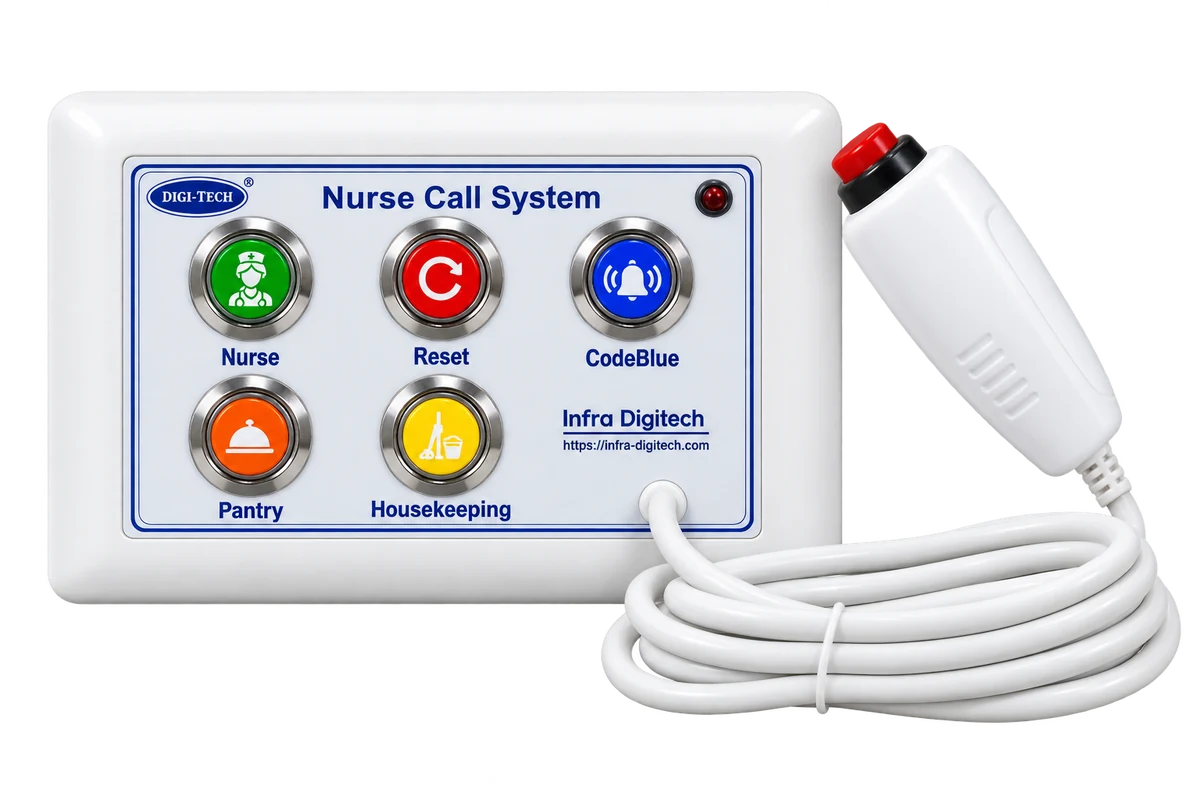
Bedside calling panel
Backlit IP65 buttons and a pendant on a lead. On Signavanc LR the unit comes as a 3-module — call, reset, Code Blue and housekeeping — or a 4-module that adds pantry; the smaller 2-module unit offered on the other models is not available here. The panel is also doing a second job: raising its own calls, and passing on its neighbours' when their path to the station is blocked.
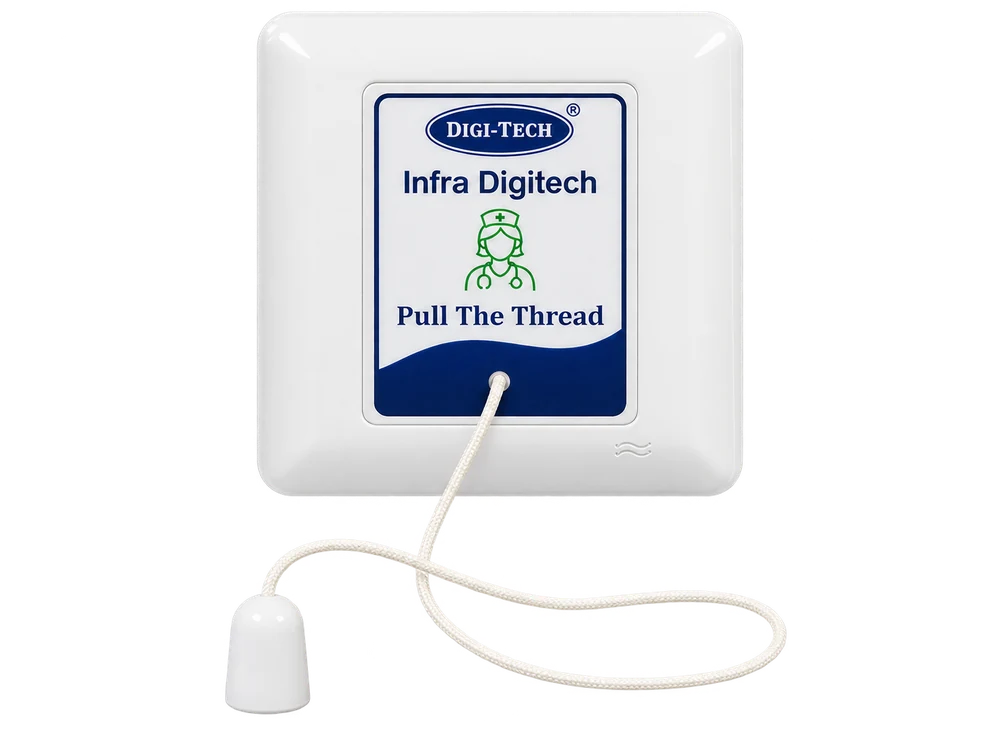
Toilet & shower pull-cord
Waterproof and hung to floor level, because a washroom call often means somebody is already on the floor. It links to the bedside calling unit over the air — or on 2-core cable if you would rather that leg were wired — and reaches the station on the same radio as everything else, which matters in an old building where washrooms sit furthest from the nurse desk.
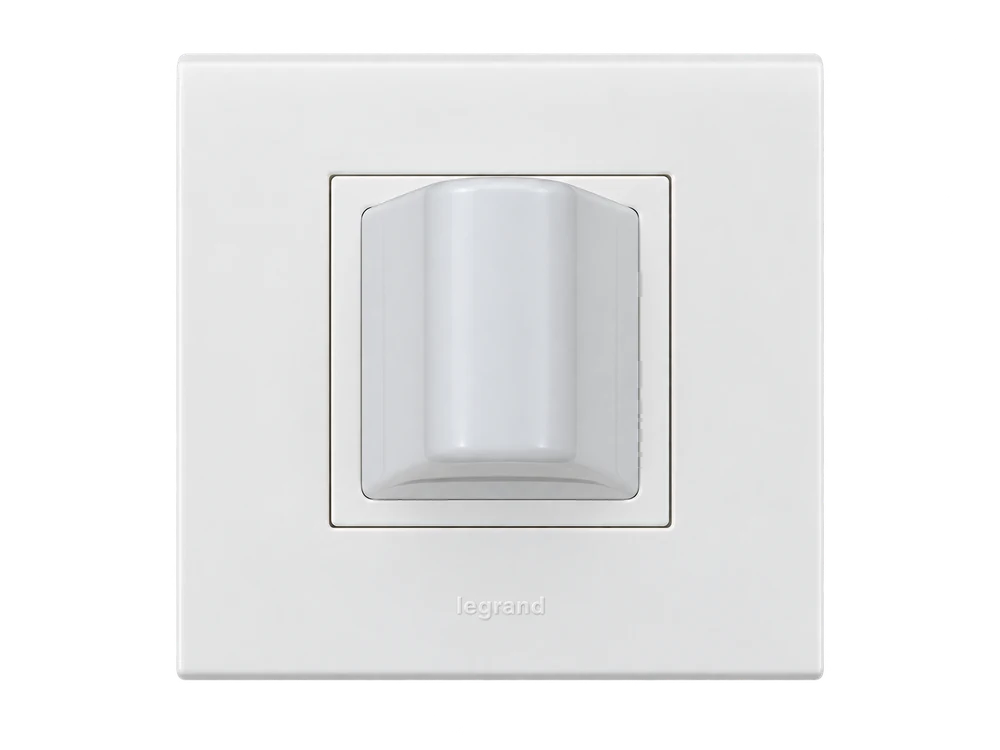
Multi-colour door indicator
A colour above each door for the type of call, mapped to your protocol and blinking for Code Blue. In a long wing, where the station may be out of sight of half the beds, the corridor becomes the thing a nurse reads.
The beds in between carry the call
Most wireless nurse call systems ask every calling unit to reach the station on its own. That works in an open ward and fails quietly in a real building, where one bed sits behind a lift shaft, another is round two corners and a third is a floor below.
A mesh removes the requirement. Each unit can pass a message on for its neighbours, so a call hops from bed to bed until it arrives — and if a path stops working, the next one is found without anybody being told to do anything. The practical consequence is counter-intuitive: coverage gets better as the ward fills up, because every extra unit is another route.
- Every calling unit can relay for its neighbours, not just talk to the station
- A unit that loses its direct path routes around the obstruction instead of dropping
- Frequency hopping moves the link across channels rather than sitting on one
- Coverage improves as the ward fills up — more units mean more routes
- No repeaters to place in most buildings; the units are the network
The buildings this model was built for
If your ward is a single open floor with light partitions, almost anything will work in it. LR exists for the rest.
Thick masonry and old construction
Load-bearing brick and stone walls two feet through are what stop ordinary short-range wireless. Long-range RF is chosen precisely because it holds up in them, and the mesh gives the signal a way round anything it cannot go through.
Basement and lower-ground wards
A basement ICU or a lower-ground recovery ward is below the level any signal from upstairs reaches cleanly. Units on the stair core and the corridor relay down into it, so the ward joins the same nurse-call system as the rest of the hospital rather than needing its own.
Long wings and buildings that bend
Wards rarely occupy neat rectangles. A wing that turns two corners puts most of its beds out of line-of-sight of the station — which matters to a single-hop system and does not matter to a mesh, because the beds in between carry the signal round the bend.
Separate blocks on one campus
Where a hospital is several buildings, LR keeps them on one nurse-call backbone instead of one system per block — so a head nurse covering the campus sees all of it, and there is one system to maintain rather than four.
Batteries, antennas and interference
Three questions decide whether a wireless nurse call system is dependable a year after it is installed. Here are ours, answered.
About a year on an AA cell
Ordinary replaceable cells, changed at roughly the interval a ward changes anything else. No charging cradles to lose and no proprietary pack to order from us.
Battery level reported to the station
Every unit sends its own level back. A weak cell shows on a screen weeks in advance, so it gets changed during a round rather than discovered by a patient pressing a button that does nothing. This is the question worth putting to any wireless supplier.
Two antenna options
An embedded spring antenna where the unit should look flush and unobtrusive, or a pop-out antenna where the ward is difficult and the extra reach is worth the look of it. We decide per position during the survey, not per order.
Frequency hopping in every unit
The calling units hop across frequencies rather than transmitting on a fixed one. In a hospital full of other equipment that is what keeps a call from being blocked by whatever else happens to be radiating at that moment.
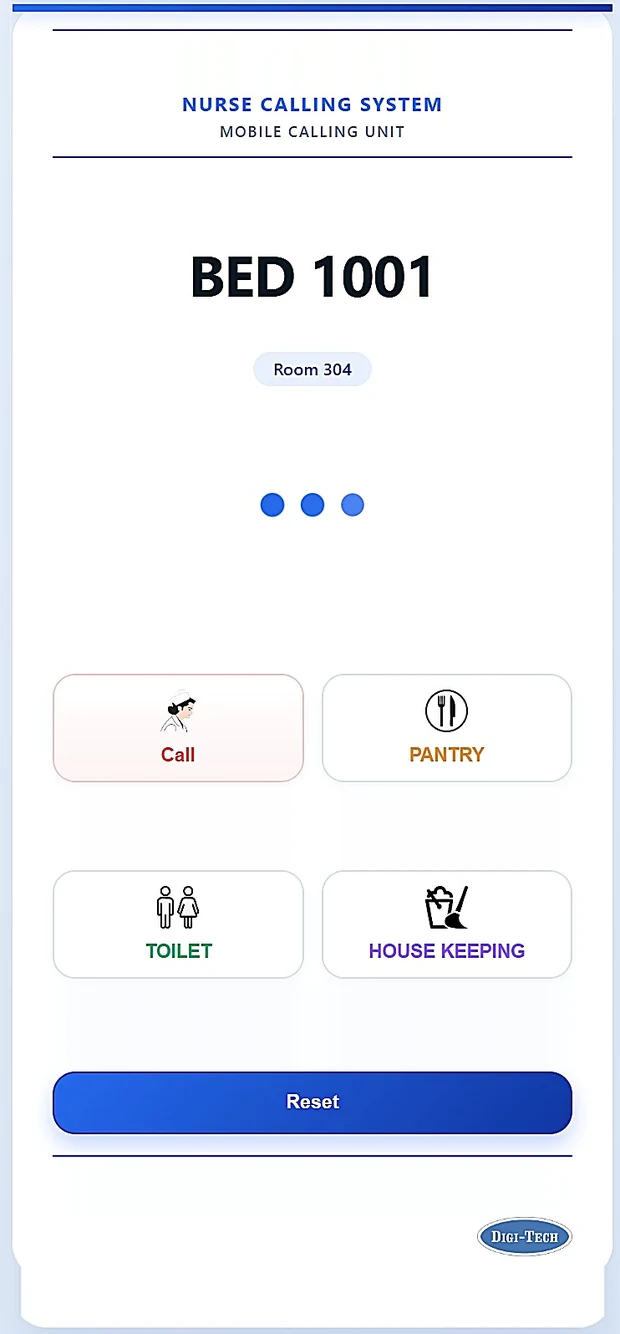
The mobile calling unit: the bed and room in large type, the call types the ward actually uses, and a reset. Wherever the mesh reaches, this reaches.
Range is worth nothing if the nurse is out of range
A system that carries a call across a campus and then puts it on a screen nobody is standing at has solved the wrong half of the problem. The handheld runs on the same radio as the beds, so wherever the mesh reaches, the nurse carrying it is still contactable — including the far wing and the floor below.
Mobile calling unit
A handheld the nurse carries, on the same radio as the beds. Calls arrive on it and are cleared from it, anywhere the mesh reaches — which on this model can mean the far end of a wing or the floor below, not just within sight of the station.
Head-nurse dashboard
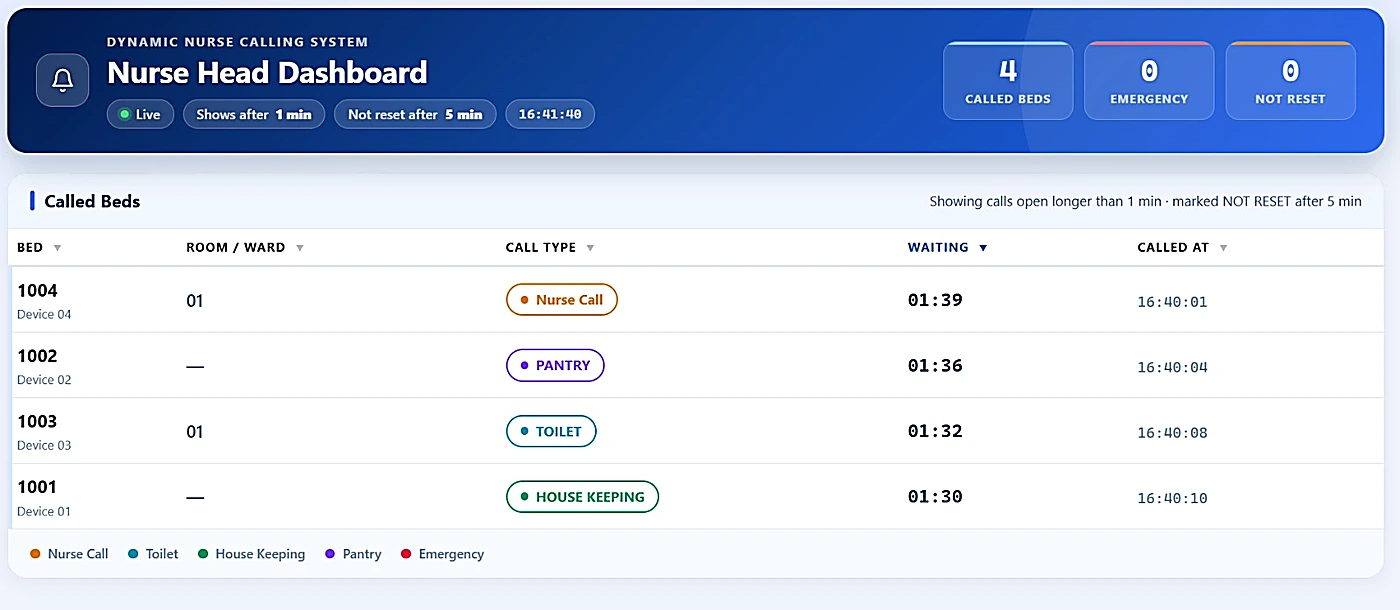
Every open call across the wards on one screen — bed, room, call type, how long it has been waiting and when it came in — with running counts of called beds, emergencies and calls nobody has reset. Where a hospital is spread across blocks and LR is holding them on one backbone, this is what makes that worth having: the whole campus at once, instead of ringing four stations.
Escalation, forwarding and SMS
You set the thresholds: how long a call may sit before the head nurse sees it, and how long before it is flagged as never reset. Both are configurable per hospital. Calls can be forwarded from one station to another — what a ward actually does at night when one team covers two floors — and SMS alerts to staff away from any screen are available as an option.
Reminders scheduled against a bed
A dose, a blood sample, a drip bottle to change: schedule it against a bed and a time, and it arrives at the station and on the handheld as a coloured card, repeating until that bed's calling unit is reset.
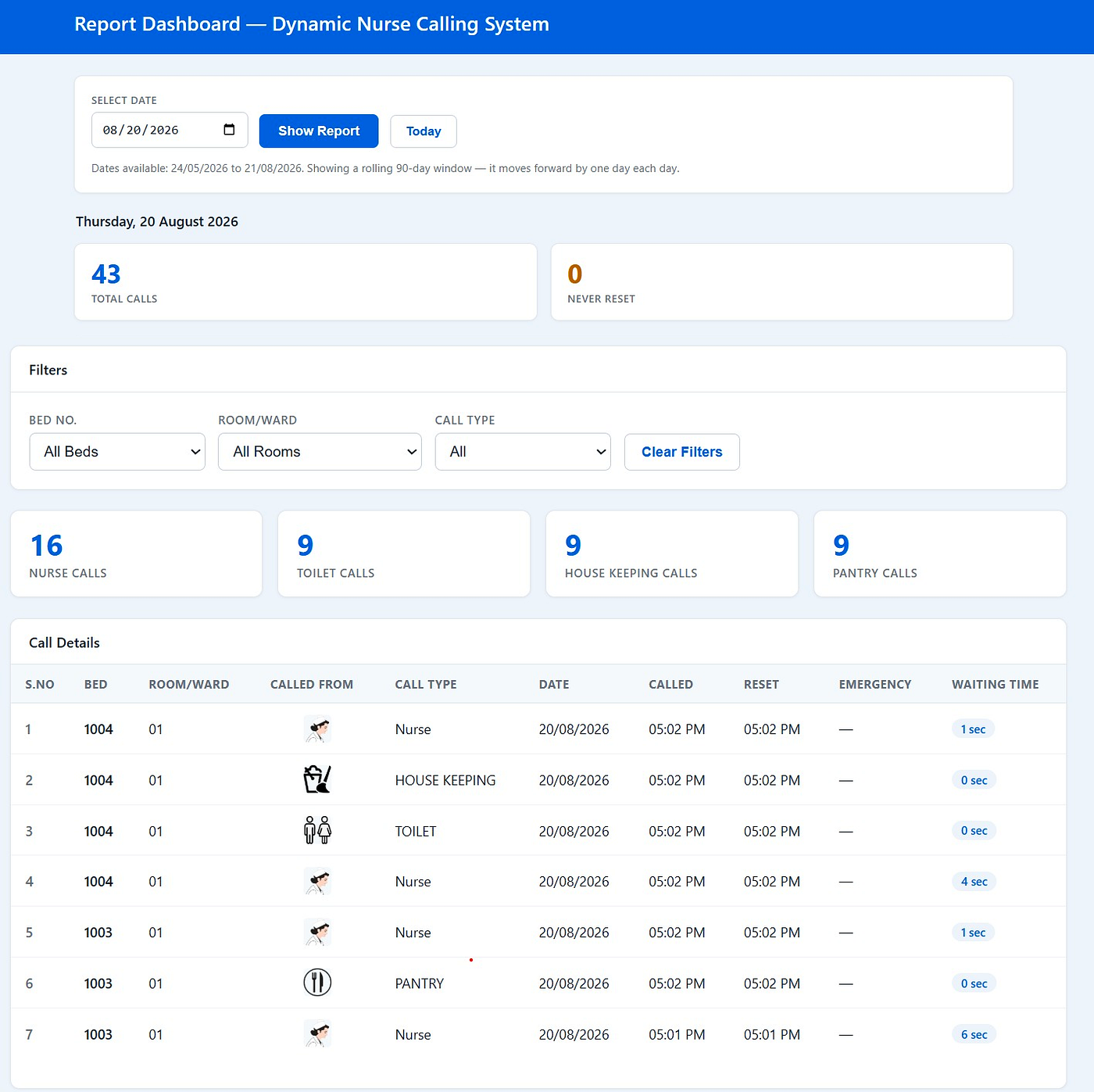
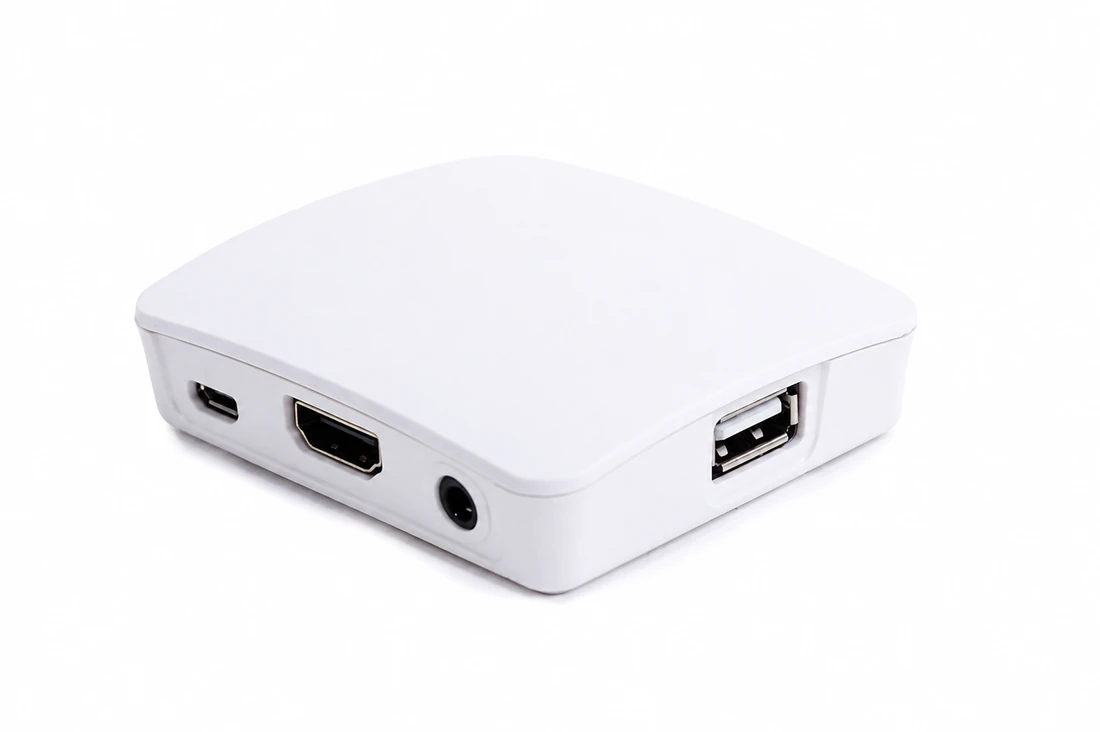
The mini server that keeps the call history in the building.
Recorded on site, shared only if you ask
Every call is logged on the server in the building before anything else happens to it. What you do with it after that is a choice — a distinction worth making, because plenty of hospitals are quoted systems where it is a condition.
Everything recorded on site
A compact server sits with the system and keeps every call, who cleared it and how long it took. Reports download from it directly, for one ward at its station or consolidated across the hospital, and for whatever period you ask for — a shift, a week, a month or between two dates. Turn Over Time, the ward's average response, comes down with them.
Cloud dashboards, if you want them
Optional. Push the consolidated reports up and analytics can be built on them. Decline it and nothing changes on the ward — which matters here, because the buildings LR suits are often the ones with the least reliable connectivity.
HIS / EMR integration, if you want it
Also optional. Where a hospital wants nurse-call data inside its clinical systems it is available; where it does not, the per-station and centralised reports work exactly the same without it.
Exportable for NABH audit
Calls latch until cleared and every one is timestamped, so response-time records can be exported for accreditation rather than reconstructed from memory when an auditor asks for them.
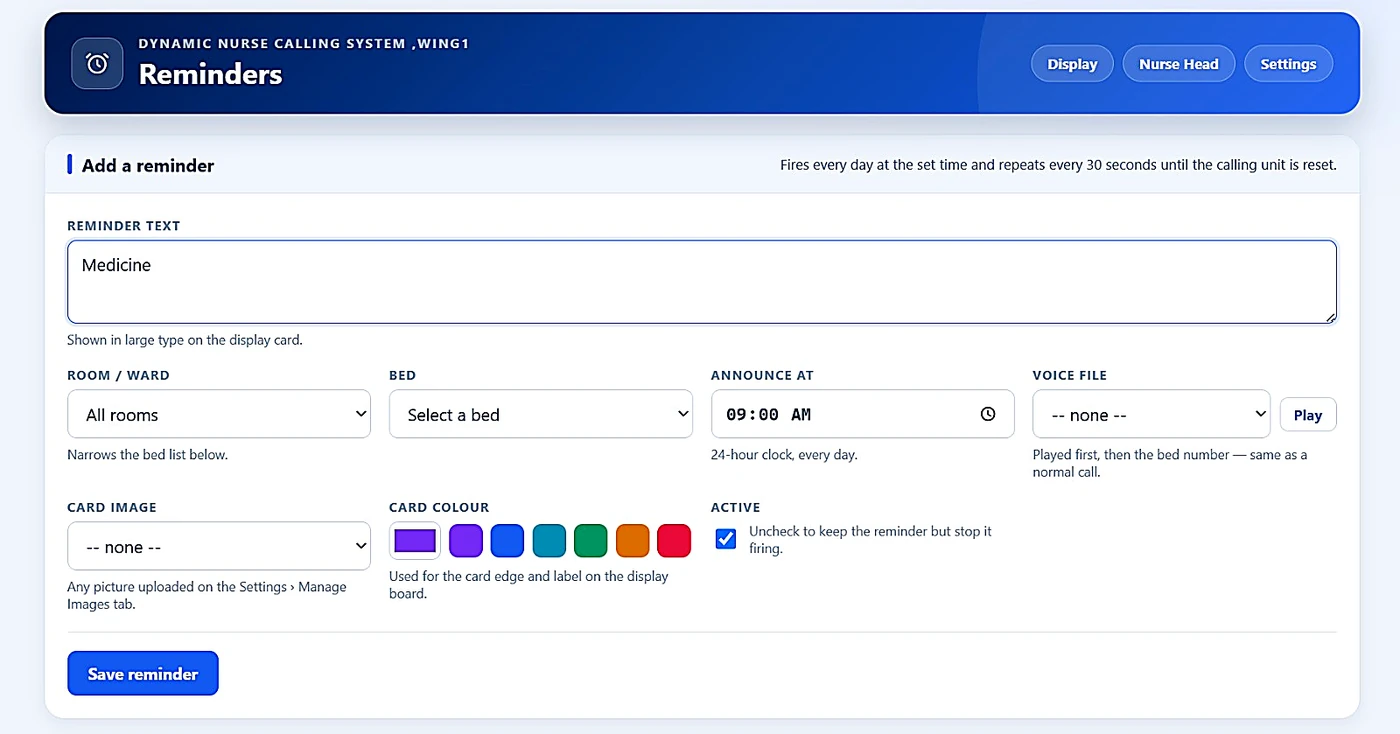
Setting one takes about ten seconds
Type the prompt, choose a bed or the whole ward, set the time and a colour, and save. It reaches the station screen and the handheld alike, and repeats until that bed's calling unit is reset.
Signavanc™ LR at a glance
The nurse station console, the bedside and washroom call points, the mobile calling unit, escalation and reporting are common to both wireless models and are set out on the wireless nurse call page. If your building is straightforward and speed of rollout matters more than reaching through it, Signavanc Air is the other half of this range.
Not sure which wireless model? It is a decision about your walls, not about features — both share the same console, call points, handhelds and reporting.
Compare LR and AirSignavanc LR — common questions
Coverage, capacity, batteries and interference — the things that decide whether a wireless system still works in year three.
What is the Signavanc LR nurse call system?
Signavanc LR carries nurse calls over long-range RF on a self-healing mesh. Each battery-powered calling unit can relay for its neighbours rather than only speaking to the nurse station, so signal finds a way through and around a building instead of needing a clear line to the desk. One station supports up to 256 calling units, and nothing is cabled to the bedside.
How far does it reach?
Far enough is a building question, not a number, and we would rather answer it properly than publish a headline figure that means nothing in your ward. A single hop through open air travels a long way; through two feet of masonry it does not. What actually determines coverage is the mesh — units relaying for each other — so we plan it against your floor plan and tell you before quoting whether any position needs help. If a supplier gives you a range in metres without asking what your walls are made of, that figure was measured in a car park.
What happens if one calling unit fails or is removed?
The mesh reroutes around it. Because relaying is shared across every unit rather than depending on particular ones, losing a single unit changes the path a message takes and not whether it arrives. The unit itself shows as missing at the nurse station, so a bed without a working call point is visible to staff rather than silently absent.
How many beds can one nurse station handle?
Up to 256 calling units per station — by a distance the highest capacity in our range, and the reason LR suits large floors and campuses. Bigger estates are split across several stations, and a head nurse can see all of them at once on the head-nurse display.
How long do the batteries last?
About a year on an AA cell in normal ward use, and every unit reports its own battery level back to the nurse station so a weak cell is visible weeks before it matters. Cells are ordinary replaceable ones — there is no charging cradle and no proprietary pack you can only buy from us.
Will it interfere with our medical equipment, or they with it?
The calling units use frequency hopping, so they move across frequencies instead of holding one that something else might occupy. That is what makes the link robust in a hospital full of other radiating equipment. We confirm the picture during the site survey, and the mesh gives us a second lever — where one position is genuinely difficult, its neighbours carry the traffic.
Does it need our hospital Wi-Fi or IT network?
No. Signavanc LR runs entirely on its own radio and does not touch the hospital network at all — no VLANs to provision, no ports to open, no clinical traffic on the corporate network and nothing that stops working when hospital IT does. If you would rather the system ran over Wi-Fi, that is our Signavanc Air model instead.
Should we choose Signavanc LR or Signavanc Air?
Choose LR when the building is the problem — thick walls, basement levels, long wings that turn corners, or several blocks that need to stay on one system. Choose Air when the building is straightforward and speed matters most, or when you would rather the system ran over Wi-Fi. Both models share the same console, call points, handhelds, escalation and reporting, so this is a decision about your walls rather than about features.
Tell us what the building is like
Bed count, wall construction, and anything awkward — a basement level, a wing that turns a corner, a block across the courtyard. We will plan the mesh against your floor plan, tell you honestly if any position needs help, and quote the same day.