
Signavanc IP nurse call system
The most deterministic system we build. Structured Cat 5/6 to every bed, fibre between hubs, and a star topology that gives every call point its own dedicated run — no daisy chain, no shared segment and no radio to plan around. Over 100 calling units on one nurse station.
Every call on one screen, with the clock running
The station runs a live console rather than a fixed panel. Calls appear as they are raised, each carrying its room and bed, a colour for the kind of attention it needs and a counter that keeps climbing until somebody answers. Nothing scrolls away and nothing clears itself.
At the foot of the screen the shift's average turnaround time and total call count sit permanently — the two figures a ward sister is asked for at handover, without anybody having to go and compile them.
- Calls listed as they are raised, each with its room, bed and a running counter
- A colour for every kind of call, so the screen reads correctly from across the station
- The room and bed spoken aloud as well as displayed, on a 5-character token
- Turn Over Time — the running average response for the ward, held permanently at the foot of the screen with the shift call count
- Optional mini nurse kiosk or tablet as a second screen further down the ward
What a patient reaches for
Three devices cover every point a patient can call from, and every one of them is its own addressable node with its own cable back to the hub.
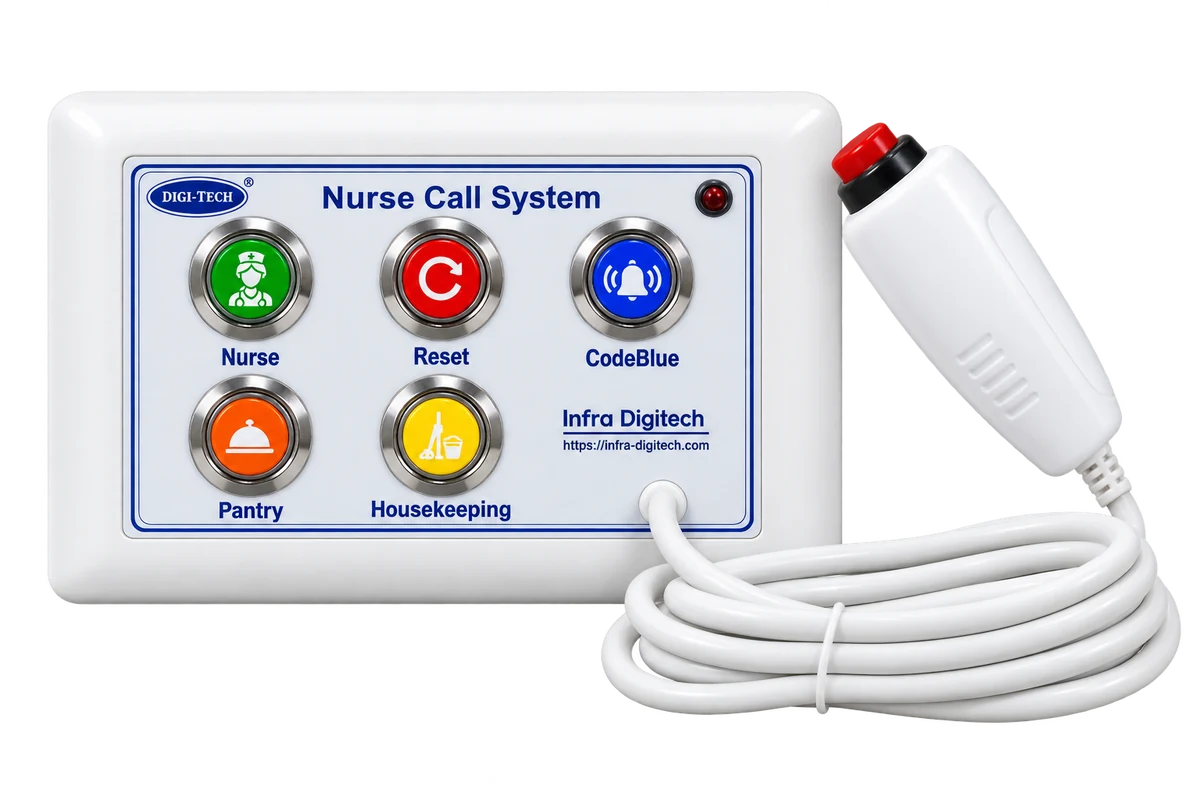
Bedside calling panel
Backlit IP65 buttons and a pendant on a lead, in a 2, 3 or 4 module unit — call, reset and Code Blue at the smallest, then housekeeping, then pantry as well. Each panel is an addressable device with its own cable back to the hub, so the console knows precisely which unit raised a call rather than only which zone it came from. The pull-cord and the corridor indicator wire into the calling unit on 2-core cable.
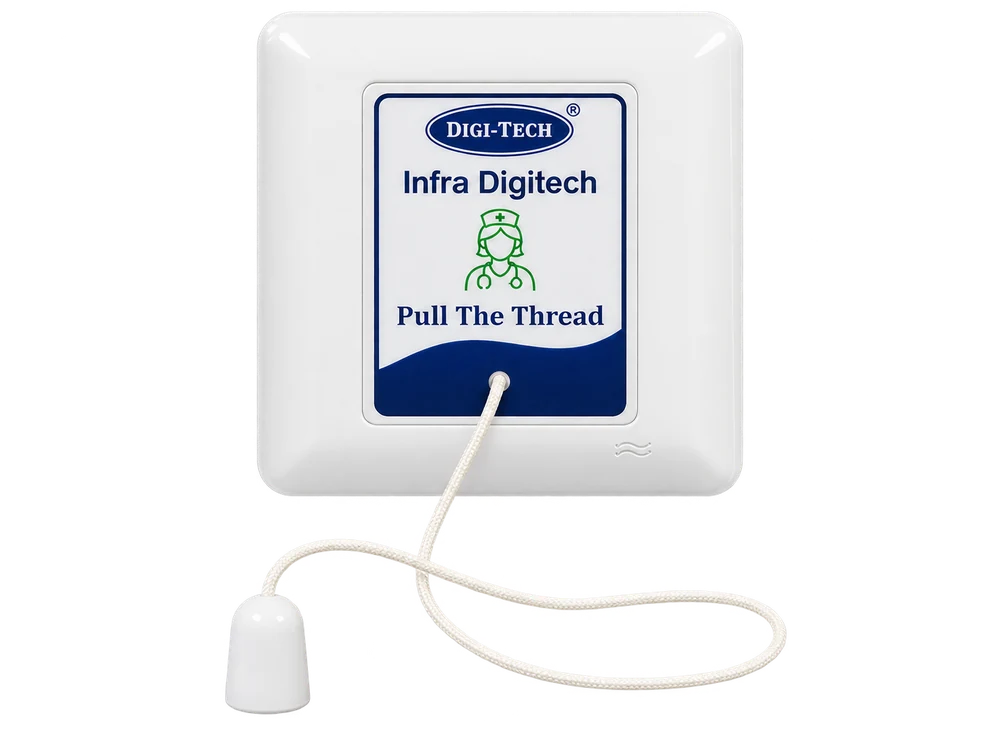
Toilet & shower pull-cord
The washroom is where a fall is most likely and least likely to be seen. The cord hangs to floor level so a patient already on the ground can still reach it, and the call it raises is flagged on the console as coming from the washroom — which changes how quickly a nurse leaves the station.
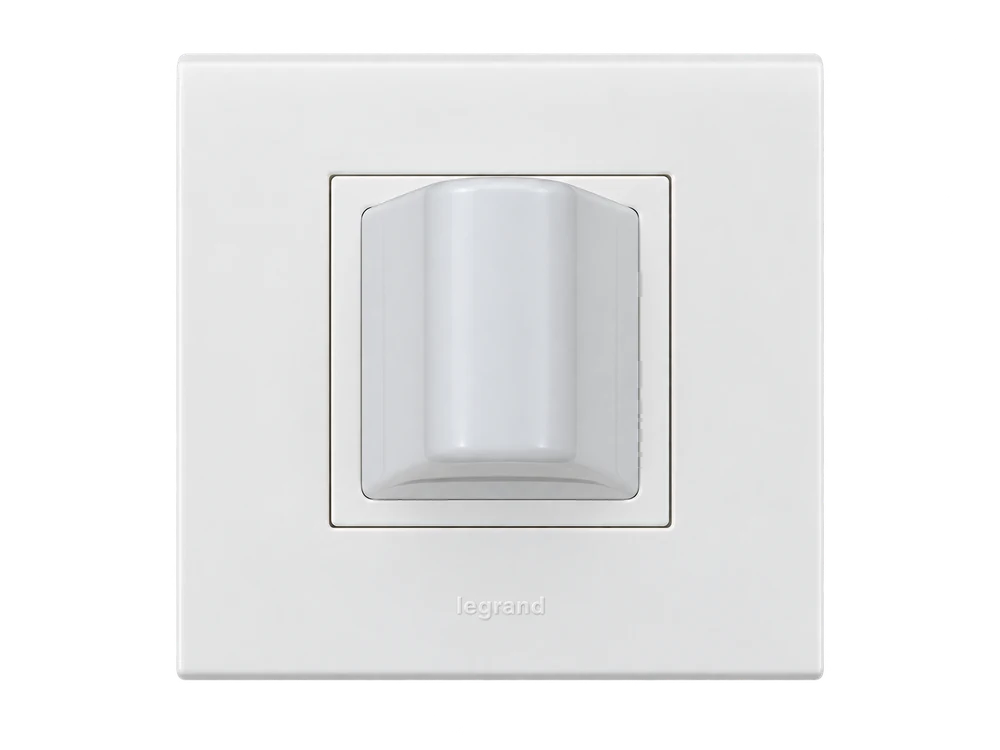
Multi-colour door indicator
Staff in a corridor should not have to walk back to a screen to learn what is happening. The indicator above each door carries a colour for each type of call, mapped to your own protocol, and blinks for Code Blue — so the corridor itself tells the story from either end of it.
One cable, one bed, no shared segment
Every call point on a Signavanc IP ward has its own cable back to the hub. Nothing is daisy-chained, and no two devices share a length of cable — which is the difference between a fault that affects one bed and a fault that takes out the six beds downstream of it.
It also makes a fault findable: when a call point stops working the problem lies along one known run rather than anywhere in a shared loop, so a biomedical engineer is testing a single cable instead of a ward. The honest limit is that a star has no second path — a cut run puts that bed off the system until the cable is repaired, and nothing announces it. If cable damage is a real risk in your building, that is an argument for the self-healing mesh on Signavanc LR rather than for this model.
- Every bed has its own run to the hub — no daisy chain, no shared segment
- No daisy chain and no shared segment — one bed's fault reaches no other bed
- A fault is confined to a single known cable, which is what makes it quick to find
- No radio to survey, no coverage map, nothing to re-plan when a wall goes up
- Fibre on the uplink carries the link between hubs and across blocks
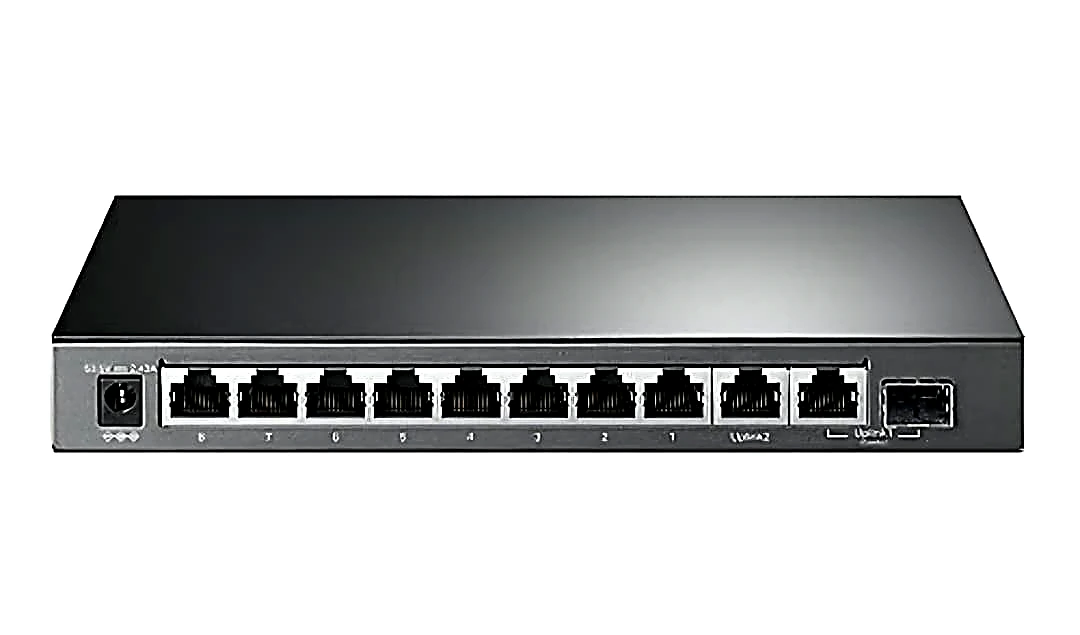
Numbered ports for the ward, two uplinks, and the SFP cage on the right that carries the fibre link to the next hub.
Ordinary networking, doing a clinical job
The part of this system a hospital IT department will ask about is the part we deliberately did not invent.
A switch your IT department already knows
We specify, supply and configure an industry-standard managed switch rather than a proprietary box. That is deliberate: your IT team can read its status page, your biomedical department can buy a spare off the shelf anywhere in India, and nothing about the ward network depends on a part only we can ship.
Fibre on the uplink
The SFP port carries the link between hubs and across blocks on fibre — immune to the electrical noise of a hospital basement, and able to cross distances copper simply cannot. Inside the ward it stays copper to each bed, which is what keeps the installation ordinary for your contractor.
Cat 5/6 to every bed
Structured data cabling to each call point, terminated the way any network run in the building is terminated. If the building is being constructed or rewired anyway, this cabling is going in regardless — which is exactly why Signavanc IP costs least to install at that moment and most to retrofit later.
Far faster than any wired alternative
Cat 5/6 carries data at network speed, not at the pace of a low-voltage serial line — orders of magnitude more headroom than the 4-core wiring the rest of our wired range uses. That is what lets a single station carry over a hundred call points, announce them by voice and log every one of them, without calls ever queuing behind each other at a busy moment.
Deterministic by design
There is no contention, no interference and no retry window. A call raised at the bedside arrives at the station in a fixed, predictable time, every time — which is the argument for putting Signavanc IP in an ICU or a critical-care block rather than anywhere else.
Cat 5 or Cat 6
Both work. Which one you should buy depends on whether the cable is already in the wall.
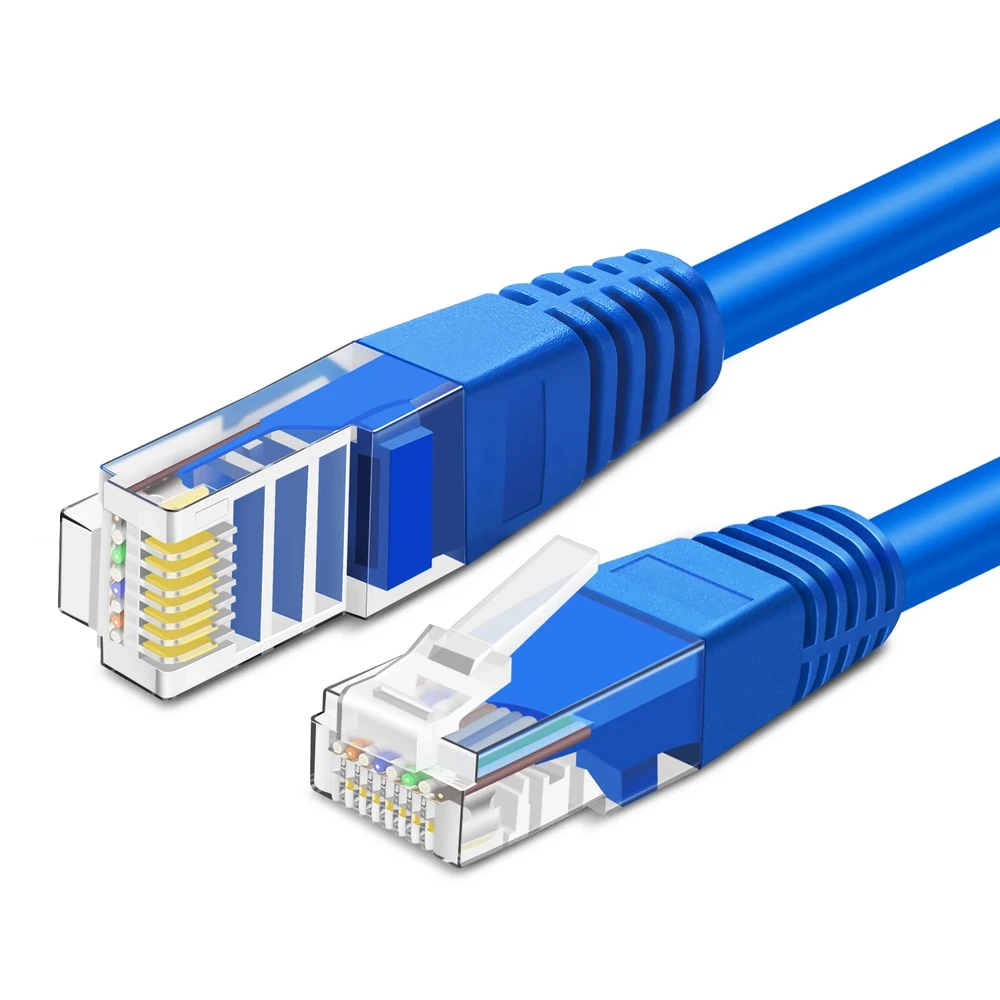
Cat 5
Serviceable where a building already has it and the runs test clean. It carries the system perfectly well; we check length and termination during the survey before recommending it.
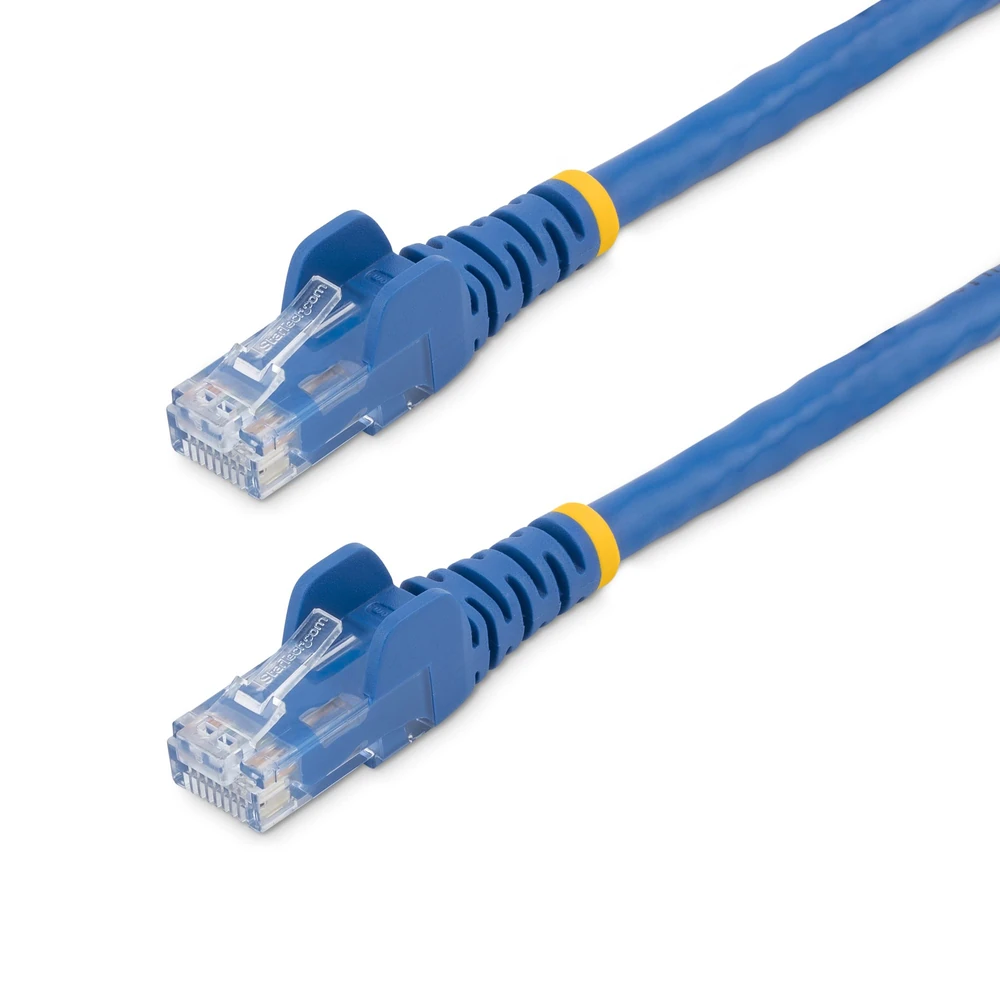
Cat 6
What we specify for anything new. Tighter twist, better noise rejection and headroom you will be glad of the day the hospital wants something else on that cabling too.
Who lays it
Your contractor. As with every wired system we build, we do not undertake cabling — your team pulls the Cat 5/6 and the fibre uplink to the schedule we provide, covering hub positions, call point positions and termination detail. That keeps the wiring under your contractor's warranty and your site supervision. We configure the switch, commission the system and hand over once the cabling is in and tested.
Your data, inside your building
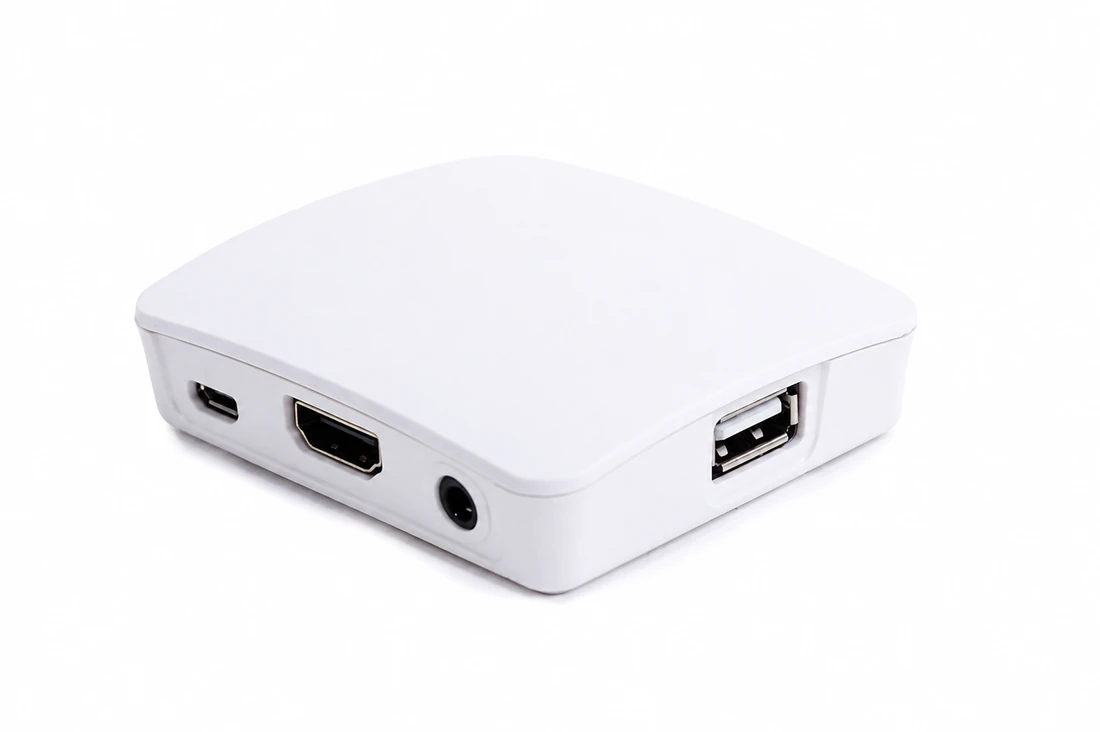
Signavanc IP keeps everything on site. A compact server holds the call history and hands it to your own systems — which for a great many hospitals, and for most government and defence sites, is not a preference but a requirement.
Reports on the mini server
A compact server sits with the system and holds every call, who cleared it and how long it took. Reports download from it directly for the ward at its own station, over whatever period is asked for — a shift, a week, a month or between two dates — Turn Over Time included. Consolidating several wards into one hospital-wide set needs a Cat 5/6 run with an RJ45 jack from each nurse-station server back to the central server — trivial while a building is being cabled, awkward afterwards, which is precisely why it belongs on the drawing now.
On-premise integration, if you want it
Optional, and plenty of hospitals never take it. If you do, the centralised reports are written into your own on-premise server so nurse-call response data lands alongside the rest of your operational reporting rather than in an island system. If you do not, the centralised reports are simply downloaded from our server as they are. Either way nothing leaves the building.
Reminders scheduled against a bed
Anything that has to happen at a time rather than on request — a dose, a blood sample, a drip bottle change — is scheduled against a bed and arrives on the console as a coloured card, on the same alerting path the calls themselves use.
Mini nurse kiosk or tab
On a large floor the main station can be a long way from the far end of it. A compact display or tablet part-way down carries the same live screen, so nobody is reading calls from memory on the walk back.
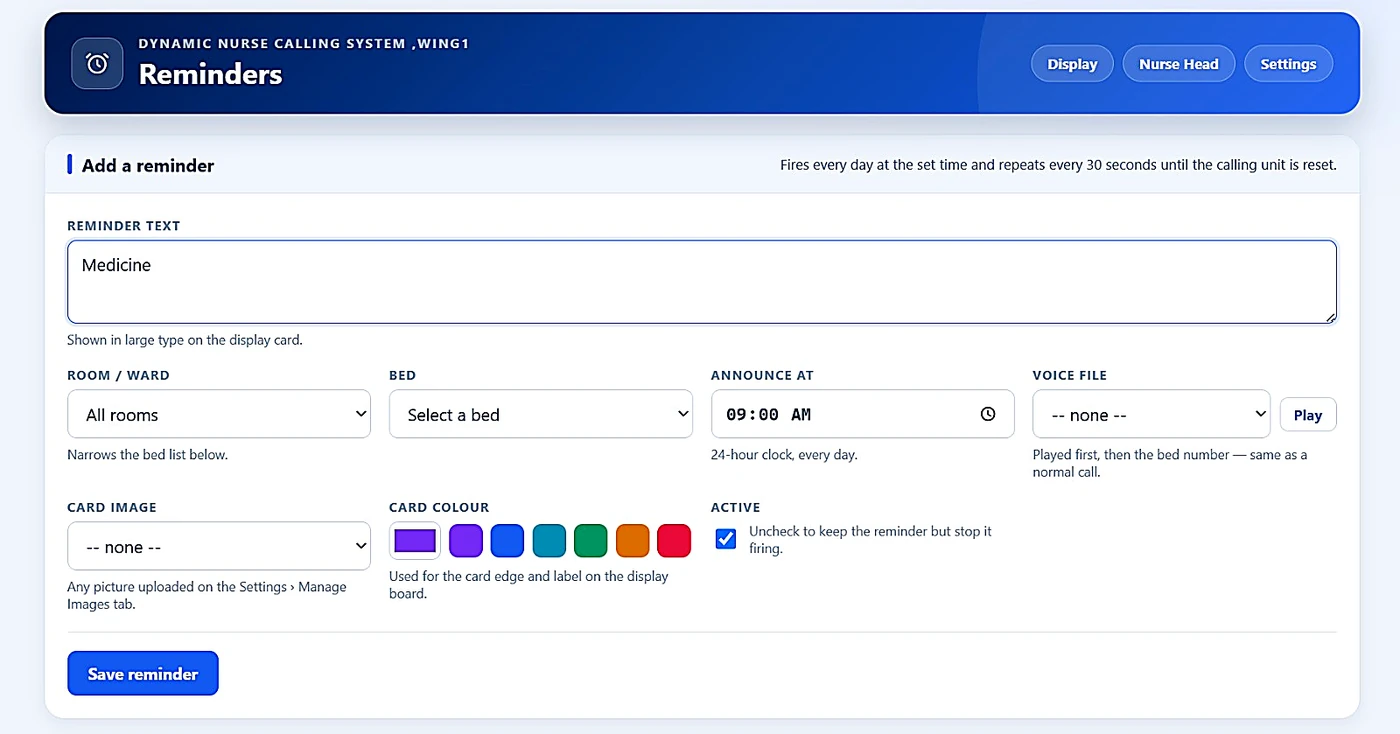
Setting one takes about ten seconds
Reminders travel the same path as a call: onto the console, into the log on the mini server, and out into your reports. Nothing about them depends on an internet connection reaching the ward.
Is Signavanc IP the right model for you?
It is the strongest system we build and it is not the answer to every ward. The honest version of both sides, before you go any further.
Choose Signavanc IP when…
- The building is being constructed, extended or fully rewired
- A single station has to carry more than a hundred call points
- It is an ICU or critical-care block, where a fixed, predictable path matters most
- Nurse-call data has to stay inside the hospital
- Your IT department would rather support standard network hardware than a proprietary box
Look at another model if you need…
- SMS escalation to the head nurse when a call goes unansweredSignavanc LR / Air
- A head-nurse app for multi-ward monitoring, or a nurse mobile appSignavanc LR / Air
- HIS / EMR integration, or cloud dashboards and analyticsSignavanc LR / Air
- An occupied ward that cannot be closed for cablingSignavanc LR / Air
- A finished building that never had data cabling pulledWired on 4-core
Signavanc™ IP at a glance
Code Blue, NABH compliance and the shared platform features are set out on the nurse calling system hub. If the building is finished and never had data cabling pulled, our wired range on ordinary 4-core cable reaches an LCD nurse station without opening the walls.
Specify it while the walls are open
Signavanc IP costs least to install at the moment a building is being cabled anyway, and most to retrofit afterwards. If a project is at drawing stage, this is the decision worth making now — send us the floor plans and we will mark up hub positions and the cable schedule before the contractor starts.
IP nurse call — common questions
Topology, cabling, capacity and where your data lives.
What is an IP nurse call system?
An IP nurse call system carries calls over structured data cabling and network switches rather than over dedicated low-voltage wiring or radio. In our Signavanc IP system, each bedside panel, pull-cord and door indicator has its own Cat 5/6 run to a 12-port managed switch, hubs link to each other over fibre, and a nurse-station console shows every active call. Because it is an ordinary network underneath, it behaves predictably and your hospital's IT department can see and support it.
What topology does Signavanc IP use?
A star: every call point has its own dedicated cable run back to the hub. Nothing is daisy-chained and no two devices share a segment, so a fault at one bed cannot degrade another, and a problem is confined to one known cable rather than a length of ward. The trade-off is worth stating plainly too — a star has no second path, so a cut run puts that bed off the system until the cable is repaired, and nothing announces it. Where cable damage is a real risk in your building, or where you want signal to route around an obstruction, that is the argument for Signavanc LR and its self-healing mesh.
Do we need Cat 6, or will Cat 5 do?
Cat 5 carries the system perfectly well where a building already has it and the runs test clean — we check length and termination during the site survey before recommending it. For anything new we specify Cat 6, for its tighter twist, better noise rejection and the headroom you will want the day the hospital puts something else on that cabling.
Is the 12-port hub proprietary?
No, and that is intentional. We specify, supply and configure an industry-standard managed switch rather than a box only we can replace. Your IT team can read its status page, your biomedical department can source a spare anywhere in India, and no part of the ward network is hostage to our shipping schedule. The nurse-call intelligence lives in our devices and our server, where it belongs.
Where does the fibre actually run?
On the uplink between hubs and across blocks, through the switch's SFP port. Inside the ward it stays copper to each bed, which keeps the installation ordinary for your electrical contractor. Fibre earns its place where the run is long or passes through electrically noisy plant areas — a basement, a service corridor, or a link to a separate building.
How many calling units can one Signavanc IP station handle?
Over 100 per nurse station, which is more than any of our other models and part of why Signavanc IP suits large floors and new blocks. Larger estates are split across multiple stations linked over fibre, each serving its own ward, with an optional mini nurse kiosk as a second display where corridors are long.
Can the reports go into our hospital's own server?
If you want them to, yes — it is an optional feature rather than something you have to take. The system's mini server holds every call with its response time, and centralised reports can be written into your hospital's own on-premise server so nurse-call data sits alongside the rest of your operational reporting. Hospitals that do not need that simply download the centralised reports from our server instead. Nothing leaves the building — Signavanc IP does not use a cloud dashboard, and it does not integrate with HIS / EMR. If HIS / EMR integration or cloud analytics are in your brief, that points to Signavanc LR or Signavanc Air instead.
Who lays the Cat 5/6 cabling and the fibre?
Your side, as with all our wired systems. Your contractor pulls the Cat 5/6 and the fibre uplink to the schedule we provide — hub positions, call point positions and termination detail — which keeps the work under your contractor's warranty and your site supervision. Our engineers configure the switch, commission the system and hand over once the cabling is in and tested.
Should we choose Signavanc IP or a wired system on 4-core?
It comes down to when you are asking. If the building is being constructed or rewired, the Cat 5/6 is going in anyway and Signavanc IP gives you the most deterministic system, the highest capacity per station and reporting into your own server. If the building is finished and never had data cabling pulled, retrofitting it is disruptive and expensive — our wired range on ordinary 4-core cable reaches an LCD nurse station, multi-colour indicators, scheduled reminders and centralised reporting without opening the walls.
Send us the floor plans
Bed count, block layout and where the nurse stations will sit. We will mark up hub positions, the cable runs, the fibre uplinks and the schedule your contractor needs — and quote the same day.