
Synchronized time looks like a commodity until you actually need it. Then the architecture choice — GPS-disciplined, NTP over ethernet, PTP over a dedicated network, or autonomous RTC — turns out to drive both cost and reliability by a large margin. Here is how procurement teams should actually decide.
What each architecture actually is
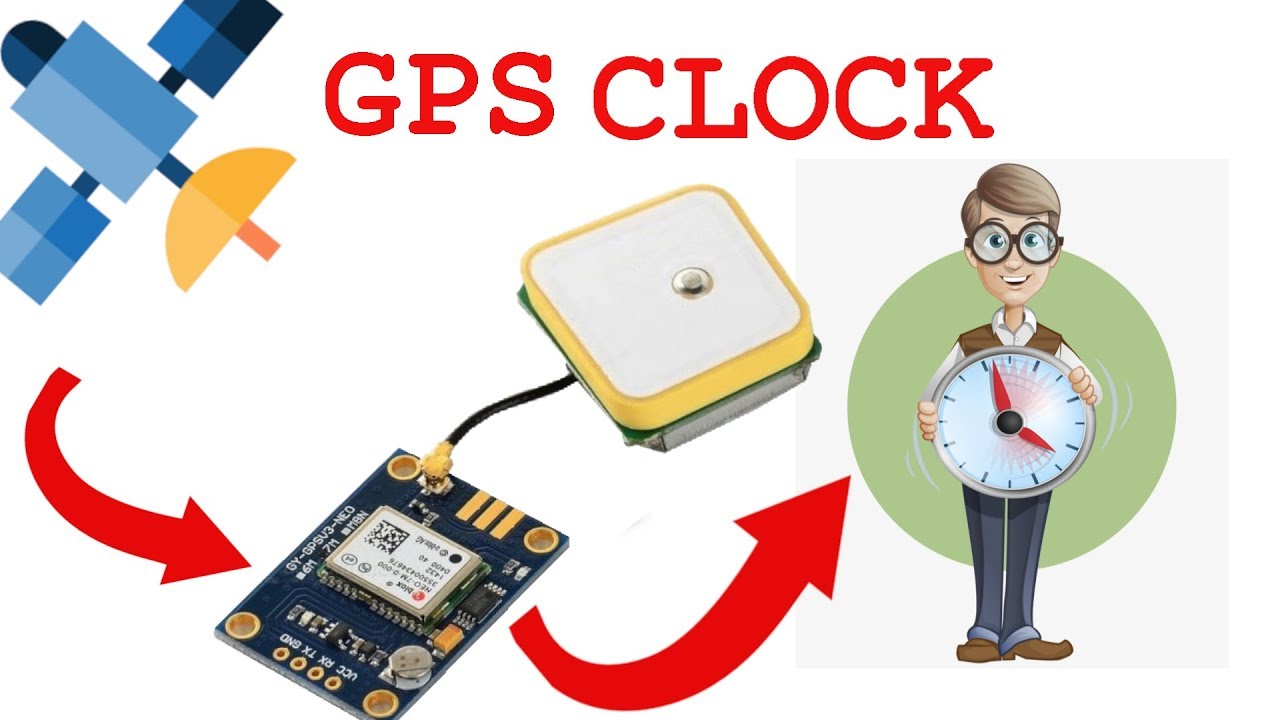
A GPS-disciplined clock contains a GPS receiver, picks up satellite timing signals from the constellation (UTC traceable, stratum 0 reference quality), and serves that time to a local display or to a downstream network of slave clocks. Accuracy: typically under 100 nanoseconds against UTC. Requires sky view — works perfectly on a rooftop, fails inside deep building interiors.
Where that downstream network is the point — one receiver feeding many displays — it is worth looking at the master-slave clock system, which does exactly this over the licence-exempt 865 MHz band instead of cable, for rooms a satellite antenna cannot serve.
An NTP clock pulls time over ethernet (or Wi-Fi) from an NTP server, typically running RFC 5905. Accuracy in a local network: usually under 10 milliseconds, often under 1ms. No sky view needed — works anywhere there's a network. Quality depends on the upstream NTP source (internal stratum-1 server, public ntp.org pool, or a vendor's appliance).
A PTP (IEEE 1588) clock is NTP's industrial cousin — sub-microsecond accuracy on a dedicated network with hardware time-stamping. Overkill for almost every commercial use case; reserved for telecom, broadcast and financial trading floors.
An autonomous RTC (real-time clock) is a battery-backed crystal oscillator with no external reference. It drifts a few seconds per month. Useful for sites with neither GPS reception nor network connectivity — typically remote outdoor industrial yards.
The decision framework
Choose GPS when...
- The clock will be installed outdoors or in a rooftop-line-of-sight indoor location.
- Time accuracy matters for legal or clinical documentation (Labour Room / Time-of-Birth clocks where birth certificates require second-precision time of birth).
- The site has no reliable network — outdoor production yards, remote facilities, large warehouses.
- You need a master clock to drive a downstream network of synchronized slave clocks over RS-485.
Choose NTP / ethernet when...
- The clock will be installed in deep interior buildings where GPS signal will not penetrate — large IT campuses, glass-and-steel office buildings, basement levels.
- The hospital has a functioning hospital-wide network already running stratum-1 time.
- You need many clocks across multiple buildings synchronized — NTP scales horizontally trivially, GPS would require many independent receivers.
- Multi-time-zone clock walls (trading rooms, international offices) where you display Mumbai / London / New York / Tokyo simultaneously.
Choose autonomous RTC when...
- The site has neither GPS sky view nor LAN connectivity.
- Sub-second precision is not required (a few seconds of drift per month is acceptable).
- Cost is the dominant constraint and the application tolerates manual periodic re-synchronization.
Indian site realities
Maternity hospitals and Labour Rooms typically need HH:MM:SS GPS precision because birth-certificate documentation in many Indian states (notably Karnataka and Tamil Nadu) requires second-precision time of birth. The clinical workflow also depends on it — APGAR scoring is timed at 1 and 5 minutes post-delivery, and small variations matter in court cases involving birth trauma.
Labour rooms, plant floors, control rooms and server rooms each place different demands on the enclosure and the digit height; the industrial and corporate GPS clock page sets out the build options for each.
Pharmaceutical cleanrooms need stainless-steel-304 housing, IP65 sealing, flush-mount, and FDA / GMP-compliant materials. The time architecture is usually NTP because cleanroom interiors have no GPS reception, but the form factor is the bigger spec driver.
IT campuses — Wipro's Sarjapur Road campus and Yokogawa Bluestar's Electronic City facility are representative examples — universally choose NTP / ethernet. The deep interiors of large IT buildings simply do not pass GPS signal, and the hospital-grade alternative (rooftop GPS master + RS-485 slaves to every floor) is operationally heavier than just running NTP over the existing ethernet backbone.
Manufacturing shop floors are the most varied. Toyota Kirloskar's Bidadi plant operates custom three-sided and four-sided suspended hanging clocks above production lines — the form factor is shop-floor-specific, the time source is typically NTP-fed via a rooftop GPS master. Lakshmi Vacuum Technologies at Peenya Industrial Area runs a similar architecture. Hosur's industrial belt (Ashok Leyland, TVS Industries) follows the same pattern at scale.
Spec'ing the wrong architecture
The most common procurement mistake is specifying GPS for a deep-interior site that cannot receive the signal — and then discovering it during install. By then the cable run is committed and the cost of switching to NTP is double what it would have been if it had been specified correctly from day one. Always confirm signal availability at the planned mount point during site survey.
Speccing synchronized time for a hospital, IT campus or manufacturing site? Talk to our engineering team — we'll do a site survey before quoting.
Read about our GPS clock systems